

Embracing the power of “yet” is a transformative approach that fosters a growth mindset, enabling individuals to unlock their full potential and sustain lasting motivation. By understanding that abilities and intelligence can develop with effort, individuals build resilience and adaptive learning strategies. This mindset shift reframes setbacks as learning opportunities, enhancing creativity and performance through dedication and hard work. Celebrating small achievements and setting clear, attainable goals further nurtures a sense of progress and self-efficacy. For those interested in strategies to combat fixed mindsets and cultivate lifelong learning, exploring the nuances of the growth mindset offers valuable insights.
Key Takeaways
Understanding the Growth Mindset

Understanding the growth mindset begins with recognizing the fundamental belief that abilities and intelligence can be developed through dedication and hard work. This perspective contrasts sharply with a fixed mindset, which sees abilities as static and unchangeable.
One of the primary mechanisms supporting the growth mindset is neuroplasticity, the brain’s ability to reorganize itself by forming new neural connections. The neuroplasticity benefits are profound, indicating that our brains can adapt and grow in response to new experiences and challenges.
A growth mindset fosters self-efficacy development, where individuals believe in their capacity to execute behaviors necessary to produce specific performance attainments. This belief in one’s abilities enhances motivation and perseverance, crucial components for overcoming obstacles.
Furthermore, resilience building is a significant advantage of cultivating a growth mindset. When individuals view setbacks as opportunities for learning rather than insurmountable failures, they develop the fortitude to persist in the face of adversity.
Incorporating adaptive learning strategies is another hallmark of a growth mindset. Adaptive learning involves dynamically adjusting one’s learning methods based on feedback and performance, thereby optimizing the learning process.
This approach not only enhances understanding and retention but also encourages a lifelong curiosity. Embracing a growth mindset means continuously seeking knowledge and improvement, driven by an intrinsic motivation to explore and grow.
The Significance of ‘Yet’

Frequently overlooked yet profoundly impactful, the concept of ‘yet’ encapsulates the essence of a growth mindset. This single word carries with it the weight of possibility and potential, serving as a linguistic bridge between current abilities and future achievements. The importance of language in mindset transformation cannot be overstated; when individuals append ‘yet’ to statements of limitation, they unlock a world of opportunities and set the stage for personal growth.
The use of ‘yet’ encourages the embracing of challenges, a fundamental aspect of developing resilience. Instead of viewing obstacles as insurmountable, the phrase “I haven’t mastered this yet” shifts the focus to the process of learning and improvement. This subtle but powerful change in perspective fosters a mindset that views setbacks not as failures, but as integral steps in the journey toward mastery.
Consequently, resilience development becomes a natural byproduct of this mindset, equipping individuals with the tenacity to persist even in the face of adversity.
Additionally, the concept of ‘yet’ aligns seamlessly with the ideals of lifelong learning. It underscores the belief that abilities and intelligence can be developed with time, effort, and perseverance. By incorporating ‘yet’ into self-reflective language, individuals reaffirm their commitment to continuous growth and education.
This approach not only enhances personal and professional development but also cultivates a culture of innovation and curiosity.
Benefits of a Growth Mindset
Adopting a growth mindset yields a multitude of benefits that extend across various domains of life. One of the most significant advantages is resilience building. Individuals with a growth mindset perceive challenges as opportunities for development rather than insurmountable obstacles. This perspective fosters a robust sense of resilience, enabling them to persist in the face of adversity and recover from setbacks more effectively.
Another notable benefit is improved performance. By embracing the belief that abilities can be developed through dedication and hard work, individuals are more likely to engage in continuous practice and seek constructive feedback. This commitment to growth fosters not only skill enhancement but also superior performance in academic, professional, and personal arenas.
Enhanced creativity is another positive outcome of cultivating a growth mindset. When individuals view their potential as expandable, they are more inclined to experiment with new ideas and take intellectual risks. This openness to innovation and experimentation leads to the generation of novel solutions and breakthroughs, driving both personal and professional advancement.
Lifelong learning is intrinsically linked to a growth mindset. Those who believe in their capacity for growth are naturally inclined to pursue new knowledge and skills throughout their lives. This commitment to continuous learning not only enriches their intellectual landscape but also keeps them competitive and relevant in an ever-evolving world.
Lastly, increased adaptability is a hallmark of a growth mindset. In a world characterized by rapid change, the ability to adapt is crucial. Individuals who view challenges as learning opportunities are better equipped to navigate transitions and embrace new experiences, ensuring their sustained success and well-being.
How to Embrace ‘Yet’

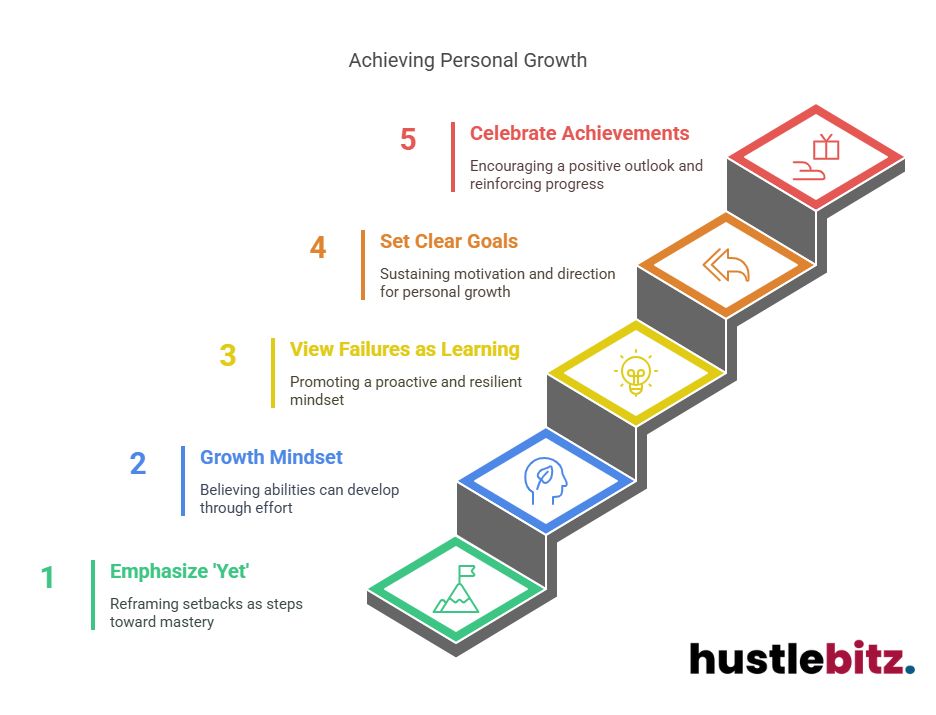
Embracing the concept of ‘yet’ is a transformative approach that can significantly bolster one’s growth mindset. This powerful word serves as a catalyst for embracing challenges, reframing failures, and fostering resilience. By integrating ‘yet’ into our vocabulary, we recognize that our current limitations are not permanent but rather stepping stones toward future success.
To embrace ‘yet,’ one must start by reframing failures as opportunities for growth. Instead of seeing setbacks as definitive endpoints, view them as temporary states. For instance, saying “I haven’t mastered this skill yet” implies that mastery is within reach with continued effort and learning. This shift in perspective encourages a proactive approach to problem-solving and continuous improvement.
Setting goals is another crucial component of embracing ‘yet.’ Clear, attainable goals provide direction and motivation. By breaking down larger objectives into smaller, manageable tasks, individuals can track their progress and make adjustments as needed. This method not only makes the path to achievement less daunting but also supplies frequent opportunities to celebrate progress, reinforcing the growth mindset.
Celebrating progress, no matter how small, is essential in fostering resilience. Acknowledging achievements, even incremental ones, nurtures a sense of accomplishment and motivates further effort. By focusing on what has been achieved rather than what remains undone, individuals maintain a positive outlook and a sustained drive to succeed.
In essence, embracing ‘yet’ involves a deliberate shift in mindset, where challenges are welcomed, failures are reframed, resilience is cultivated, goals are set, and progress is celebrated. This holistic approach not only enhances personal growth but also ensures lasting motivation in the face of adversity.
Overcoming Fixed Mindsets
Overcoming fixed mindsets is essential for fostering a culture of continuous growth and development. Fixed mindset barriers often stem from self-limiting beliefs that restrict individuals from reaching their full potential. These barriers can manifest as an aversion to challenges and an unwillingness to learn from failures. To dismantle these obstacles, it is crucial to engage in shifting perspectives that promote resilience building and an appreciation for the learning process.
One effective approach is to reframe challenges as opportunities for growth rather than threats to competence. Embracing challenges encourages individuals to step outside their comfort zones and develop new skills. This shift in mindset can transform perceived failures into valuable lessons, thereby fostering a more resilient attitude toward setbacks.
| Fixed Mindset Barriers | Growth Mindset Strategies |
| Fear of Failure | Viewing failure as feedback |
| Avoidance of Challenges | Embracing new opportunities |
| Fixed Intelligence Beliefs | Belief in development through effort |
| Focus on Outcomes | Emphasis on learning process |
Self-limiting beliefs can be particularly pernicious, as they often go unchallenged and become ingrained behavioral patterns. To counteract these beliefs, one must actively engage in resilience building by setting incremental goals and celebrating small victories. This practice helps in gradually altering the internal narrative from “I can’t” to “I can improve.”
Shifting perspectives is not merely an individual endeavor but a collective responsibility. Organizations and communities should cultivate environments that support continuous learning and growth. This can be achieved by providing constructive feedback, recognizing effort, and encouraging a collaborative approach to problem-solving.
Teaching ‘Yet’ to Children

Incorporating the concept of ‘yet’ into children’s educational frameworks can significantly enhance their developmental trajectories. This powerful word serves as a cornerstone for teaching perseverance, encouraging exploration, and fostering resilience. By integrating ‘yet’ into everyday interactions and academic settings, educators and parents can help children understand that their abilities and intelligence can grow with effort and time.
When teaching perseverance, the word ‘yet’ transforms a child’s mindset from a fixed belief in their current limitations to an understanding that improvement is possible. For instance, when a child says, “I can’t do this,” responding with “You can’t do this yet” opens the door to future success and continuous effort. This approach also encourages exploration, as children become more willing to try new activities without the fear of immediate failure. They learn to view challenges as opportunities for growth rather than insurmountable obstacles.
Fostering resilience is another critical benefit of incorporating ‘yet’ into a child’s vocabulary. Resilience enables children to bounce back from setbacks and persist in the face of difficulties. By celebrating progress rather than solely focusing on outcomes, children begin to appreciate their efforts and small victories. This shift helps them develop a healthier relationship with learning and achievement.
Moreover, instilling curiosity is essential for lifelong learning. The concept of ‘yet’ nurtures a child’s innate curiosity by emphasizing that knowledge is not static. It encourages them to ask questions, seek answers, and remain engaged in their educational journey.
Final Thoughts
Embracing the power of “yet” is a simple yet transformative approach that helps individuals develop a growth mindset. By shifting focus from limitations to potential, “yet” fosters resilience, curiosity, and perseverance. This mindset encourages individuals to view challenges as opportunities for growth, fostering continuous learning and development. Celebrating small victories along the way nurtures motivation and reinforces progress, making lasting success more achievable. Whether applied to personal development, professional growth, or teaching children, incorporating the concept of “yet” can unlock significant potential for lifelong growth and fulfillment.