

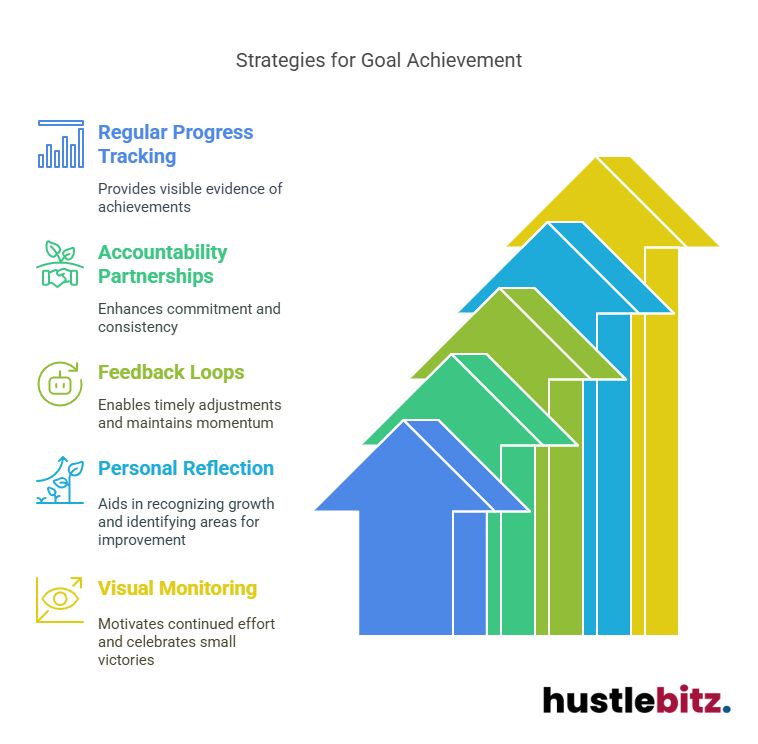
Tracking progress is a powerful tool that significantly impacts goal achievement by enhancing motivation. Both intrinsic and extrinsic motivations are reinforced through structured goal setting and continuous evaluation. Regular documentation of actions fosters habit formation, while accountability and feedback loops provide instant insights for timely adjustments. Personal reflection and noting small victories boost emotional well-being and confidence. Tools like digital apps and wearable devices offer versatile solutions for real-time data monitoring. Overcoming plateaus through incremental adjustments and reevaluation of goals ensures sustained momentum. Discovering further strategies can optimize your approach and drive success.
Key Takeaways
The Science of Motivation
The science of motivation delves into the mechanisms that drive individuals to set and pursue goals. At its core, motivation can be categorized into two primary types: intrinsic motivation and extrinsic rewards. Intrinsic motivation refers to engaging in an activity for its inherent satisfaction and personal fulfillment. This contrasts with extrinsic rewards, which involve performing a task to earn external incentives, such as money, praise, or recognition.
Behavioral psychology plays a crucial role in understanding these motivational forces. It posits that our behaviors are driven by the perceived outcomes they produce. For instance, extrinsic rewards can be effective in the short term but may undermine intrinsic motivation if overemphasized. A balance is essential to maintain long-term engagement and satisfaction.
Goal setting is another vital component of motivation. Clearly defined goals provide direction and a sense of purpose, enhancing both intrinsic and extrinsic motivation. The process of setting goals involves identifying specific, measurable, attainable, relevant, and time-bound (SMART) objectives, which can lead to higher performance and sustained effort.
Self-determination theory (SDT) further enriches our understanding of motivation by emphasizing the importance of autonomy, competence, and relatedness. According to SDT, individuals are more likely to be intrinsically motivated when they feel a sense of control over their actions (autonomy), believe in their ability to achieve their goals (competence), and experience a connection with others (relatedness).
Benefits of Progress Tracking

Understanding the science of motivation lays the groundwork for exploring how progress tracking can enhance goal achievement. By consistently monitoring our steps toward a goal, we can leverage various psychological benefits that support sustained effort and eventual success.
Firstly, progress tracking fosters habit formation. When individuals regularly document their actions, they create a structured routine that reinforces positive behaviors. This habitual practice helps embed goal-oriented actions into daily life, making them second nature over time.
Secondly, the use of accountability partners amplifies the benefits of tracking. Sharing progress with someone else introduces a layer of external motivation. Knowing that someone else is aware of your progress or lack thereof can compel individuals to stay committed and take consistent action, thereby increasing the likelihood of achieving their goals.
Thirdly, progress tracking facilitates personal reflection. Regularly reviewing what has been accomplished allows individuals to recognize their growth and identify areas needing improvement. This self-awareness is crucial for making informed adjustments to strategies, ensuring that efforts remain aligned with the overarching goal.
Progress tracking also contributes significantly to emotional well-being. Noting small victories along the way provides a sense of accomplishment, which can boost morale and confidence. This positive emotional feedback loop is essential for maintaining long-term motivation, particularly when facing challenging or prolonged tasks.
Furthermore, tracking progress creates effective feedback loops. These loops offer immediate insights into what is working and what is not, enabling timely course corrections. Such responsiveness ensures that individuals remain on the most efficient path to their goals, minimizing wasted time and effort.
Impact on Goal Achievement

Achieving goals is significantly influenced by the practice of progress tracking. The structured approach to goal setting, coupled with regular assessment, enhances the likelihood of attaining desired outcomes. Tracking progress serves as a vital mechanism that fosters intrinsic motivation by providing tangible evidence of advancement. As individuals observe their incremental achievements, their commitment to goals is reinforced, fostering a positive feedback loop that propels further effort and persistence.
Analyzing the impact of progress tracking reveals several key components:
| Component | Description | Impact on Goal Achievement |
| Goal Setting | Establishing clear, actionable objectives | Creates a roadmap, clarifying the path to success |
| Accountability Partners | Collaborating with others to maintain commitment | Enhances responsibility and adherence |
| Self Reflection Techniques | Regularly evaluating personal performance and outcomes | Identifies areas of improvement and celebrates wins |
One salient aspect is the role of accountability partners. Collaborating with others to monitor progress ensures a shared sense of responsibility and adherence to goals. These partnerships contribute to sustained effort, as individuals are less likely to falter when they know their progress is being observed by someone else.
Intrinsic motivation is another critical factor bolstered by progress tracking. When individuals witness their own advancements, it creates a sense of internal reward, further fueling their drive to achieve. This intrinsic motivation is crucial for long-term commitment and perseverance.
Feedback loops generated through progress tracking are integral to maintaining momentum. They provide continuous information on performance, allowing for timely adjustments and refinements to strategies. These loops serve as a guide, ensuring that efforts remain aligned with overarching objectives.
Lastly, self reflection techniques play a pivotal role in evaluating both successes and setbacks. By fostering a habit of introspection, individuals can better understand their strengths and areas needing improvement, thereby optimizing their approach to goal achievement.
Tools for Measuring Progress

Effective measurement tools are essential for tracking progress toward goal achievement, providing a concrete framework for evaluation and adjustment. These tools enable individuals to monitor their progress, identify areas for improvement, and stay motivated. Various progress tracking tools are available to support this endeavor, each offering unique advantages.
- Digital Apps: Modern digital apps are among the most versatile progress tracking tools. They offer functionalities such as setting reminders, tracking milestones, and generating progress reports. Apps like Trello, Asana, and MyFitnessPal provide user-friendly interfaces and customizable features that cater to diverse goal-setting needs, from project management to personal fitness.
- Wearable Devices: Wearable devices, such as fitness trackers and smartwatches, have revolutionized the way individuals track physical and health-related goals. These devices provide real-time data on metrics such as steps taken, calories burned, and heart rate. The integration of feedback mechanisms, like notifications and visual progress charts, helps users maintain motivation and adjust their activities accordingly.
- Goal Setting Frameworks: Structured goal setting frameworks, such as SMART (Specific, Measurable, Achievable, Relevant, Time-bound) goals, offer a strategic approach to breaking down and tracking objectives.
These frameworks ensure that goals are clearly defined and measurable, making it easier to monitor progress. Additionally, they often incorporate feedback mechanisms that facilitate regular evaluation and recalibration of efforts.
Overcoming Plateaus

How can individuals maintain momentum when progress stalls? Encountering a plateau during the pursuit of a goal is a common experience, yet maintaining momentum during these periods is crucial for continued success.
Implementing effective plateau strategies can mitigate the frustration associated with stagnation. One such strategy involves making incremental adjustments. By breaking down larger goals into smaller, more manageable tasks, individuals can experience a sense of achievement more frequently, which can reignite motivation and help overcome stagnation.
A critical aspect of overcoming plateaus is mindset shifts. Adopting a growth mindset, which views challenges as opportunities for learning and improvement, can transform periods of stagnation into valuable experiences. This perspective encourages resilience building, equipping individuals with the mental fortitude to persevere through difficult phases.
Engaging accountability partners can also be a powerful tool. These partners provide external motivation and support, helping to keep individuals on track and offering an additional layer of encouragement. Regular check-ins with accountability partners ensure that progress is continually monitored and adjusted as necessary.
Moreover, resilience building is essential for navigating plateaus. Developing resilience involves fostering a positive attitude, maintaining flexibility, and learning to manage stress effectively.
These qualities enable individuals to bounce back from setbacks more robustly and remain focused on their long-term objectives.
Visualizing Success
Visualizing success serves as a powerful cognitive strategy that can significantly enhance goal achievement. This technique leverages the mind’s ability to create mental images of desired outcomes, which in turn, can motivate individuals to take actionable steps towards their goals. By integrating goal visualization with tools such as progress graphs and motivational reminders, individuals can maintain a clear focus on their objectives and track their advancement effectively.
The practice of success imagery involves creating vivid and detailed mental pictures of what achieving a goal looks like. This mental rehearsal can reinforce commitment and increase the likelihood of success. For instance, athletes often use visualization to improve their performance, picturing themselves crossing the finish line or executing a perfect play. This same strategy can be applied to personal and professional goals.
To effectively visualize success and its impact on goal achievement, consider the following key components:
- Progress Graphs: Regularly updating visual representations of progress helps in monitoring achievement benchmarks. These graphs provide a visual cue that can keep individuals motivated and aware of their progress.
- Motivational Reminders: Incorporating daily or weekly reminders that align with the envisioned success can sustain motivation. These reminders can be in the form of quotes, images, or personal notes that reinforce the end goal.
- Achievement Benchmarks: Setting and celebrating small, intermediate milestones can make the journey towards the ultimate goal more manageable and rewarding. Recognizing these benchmarks keeps the momentum going and provides a sense of accomplishment.
Final Thoughts
Tracking progress is a crucial tool for sustaining motivation and achieving goals. By regularly monitoring actions, celebrating small victories, and utilizing feedback loops, individuals can stay committed and make timely adjustments to their strategies. Whether through digital apps, wearable devices, or personal reflection, tracking offers visible proof of progress and reinforces both intrinsic and extrinsic motivation. Overcoming plateaus and visualizing success further enhance goal pursuit, creating a resilient mindset and fostering long-term achievement. Integrating these strategies into your approach ensures continued growth, adaptability, and fulfillment on the journey to success.