

Smelling pleasant scents at your desk can profoundly impact your happiness by engaging the limbic system, which governs emotions and memory. Specific fragrances like lavender foster calmness, while citrus scents invigorate, enhancing your mood and reducing stress. Pleasant aromas can decrease cortisol levels, improve concentration, and boost productivity. Scents such as peppermint can also spark creativity and mental clarity, making your workspace more engaging. Tailoring the olfactory environment to your preferences can foster a sense of comfort and motivation, optimizing your work experience. Discover how different scents can transform your workday and elevate your productivity further.
Key Takeaways
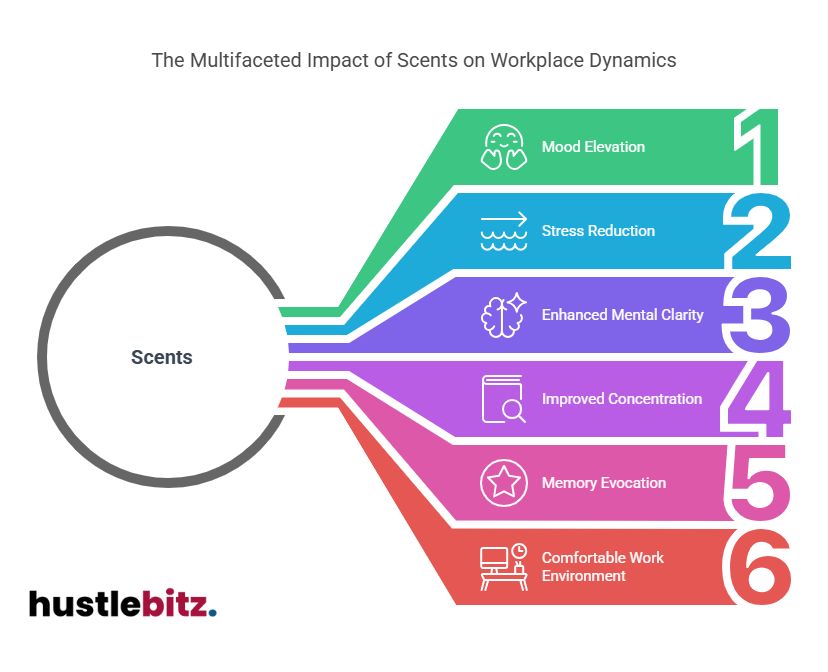
- Pleasant scents elevate mood by triggering positive emotional responses linked to the limbic system.
- Specific fragrances like lavender and citrus reduce stress and enhance mental clarity.
- Scents like peppermint and citrus boost concentration and cognitive performance.
- Familiar fragrances can evoke comforting memories, improving overall workplace satisfaction.
- Personalized scents create a comfortable and motivating work environment.
How Smells Affect Mood

When it comes to workplace dynamics, the power of scent cannot be underestimated. Our sense of smell, or olfaction, is intricately linked to the limbic system, the part of the brain that governs emotions and memory. This connection means that fragrance preferences and scent associations can significantly influence our emotional responses, directly impacting our mood at work.
A carefully curated workplace ambiance, enhanced through olfactory stimulation, can create a more pleasant and productive environment. For instance, the scent of lavender is commonly associated with calmness and relaxation, helping to alleviate feelings of anxiety and stress. On the other hand, citrus scents like lemon and orange are often linked to feelings of freshness and invigoration, potentially boosting energy levels and enhancing focus.
Understanding individual fragrance preferences is crucial, as different scents can evoke varied emotional responses among employees. While one person may find the smell of vanilla soothing, another might associate it with unpleasant memories, leading to discomfort.
Therefore, it’s essential to consider the collective preferences and potential scent associations within a team to ensure that the chosen fragrances contribute positively to the overall workplace ambiance.
Moreover, subtle olfactory stimulation through strategically placed diffusers or scented candles can foster a sense of well-being and contentment. These sensory enhancements can transform the workplace into a more inviting and emotionally supportive space, where employees feel more engaged and at ease.
Stress Reduction
Incorporating carefully selected scents into the workplace can serve as a powerful tool for stress reduction. The strategic use of olfactory triggers can significantly enhance the workplace atmosphere, providing employees with a serene environment that fosters wellbeing. This approach leverages the intrinsic connection between scent and emotional states, employing specific stress relief techniques to cultivate a calmer and more focused mindset.
Calming essential oils, such as lavender, chamomile, and sandalwood, are well-documented for their soothing properties. Their application in the office can create a subtle yet profound impact on reducing anxiety and tension. Understanding individual scent preferences is crucial to ensuring that the chosen fragrances are both effective and pleasant for everyone within the vicinity.
Consider the following benefits of integrating scents in the workplace for stress reduction:
- Enhanced Relaxation: Certain scents can trigger the brain’s relaxation response, helping to alleviate stress and promote a sense of calm.
- Reduced Anxiety: Regular exposure to calming essential oils can lower cortisol levels, the hormone associated with stress.
- Improved Mood: Pleasant scents can elevate mood, contributing to a more positive and harmonious workplace atmosphere.
- Increased Focus: By reducing stress, employees can experience improved concentration and mental clarity.
- Personalized Experience: Tailoring scents to individual preferences ensures that the olfactory environment is both comforting and effective.
In essence, the strategic use of calming essential oils and the consideration of scent preferences can transform the workplace atmosphere, providing an oasis of tranquility amidst the daily hustle.
Through these stress relief techniques, employees can achieve a more balanced and peaceful state of mind, ultimately enhancing their overall workplace experience.
Boosting Productivity

Elevating workplace productivity can be significantly influenced by the strategic use of scents, leveraging the profound impact of olfactory stimuli on cognitive performance. Understanding scent preferences is essential, as individual responses to various aromas can vary considerably. Tailoring the workplace atmosphere with carefully chosen scents can create an environment conducive to focused and efficient work.
For instance, aromas like citrus and peppermint are renowned for their ability to invigorate and enhance concentration, thereby supporting productivity rituals.
Scent branding, the practice of using specific fragrances to shape a company’s identity and workplace culture, can become a subtle yet powerful tool in boosting productivity. By consistently employing a signature scent that employees associate with work, businesses can foster a sense of routine and readiness. This olfactory cue can signal the brain to transition into a work-focused state, enhancing overall performance.
However, it is crucial to be mindful of olfactory fatigue, a phenomenon where prolonged exposure to a scent results in diminished perception. Rotating scents or using them in intervals can help mitigate this issue, ensuring that the benefits of scent-based productivity aids are sustained over time.
Integrating scents into productivity rituals can also create a more engaging and pleasant work experience. Simple practices such as diffusing essential oils or using scented candles during specific work periods can establish a harmonious balance between stimulation and relaxation.
This approach not only enhances individual performance but also contributes to a cohesive and dynamic workplace atmosphere.
Enhancing Creativity

Enhancing creativity in the workplace can be significantly influenced by the strategic use of scents, leveraging the intricate connection between olfactory stimuli and imaginative thinking. The subtle power of fragrance can transform a mundane desk into a haven for creative brainstorming, where ideas flow more freely and innovation thrives. This is not merely an abstract concept; it is grounded in the science of olfactory stimulation and its profound impact on cognitive functions.
Scent inspiration can be a game-changer for employees who find themselves in creative ruts. Specific fragrances, such as lavender, citrus, and peppermint, have been shown to enhance mental clarity and encourage out-of-the-box thinking. By carefully selecting scents that align with individual scent preferences, employers can craft an environment that nurtures creativity and reduces mental fatigue.
Consider the following benefits of olfactory stimulation in the workplace:
- Enhanced Focus: Certain scents, like rosemary and lemon, are known to sharpen focus, thereby enabling more effective creative brainstorming sessions.
- Mood Elevation: Fragrances such as jasmine and sandalwood can elevate mood, which is intrinsically linked to higher levels of creativity.
- Stress Reduction: Calming scents like lavender and chamomile can reduce stress, creating a more relaxed atmosphere conducive to innovative thought.
- Memory Recall: While not the focus here, some scents can indirectly boost creativity by facilitating better memory recall, which enriches idea generation.
- Personalized Workspaces: Allowing employees to choose their preferred scents can lead to a more personalized and inspiring workspace, fostering a sense of ownership and motivation.
Employers should not underestimate the power of fragrance associations in shaping a creatively stimulating environment. By leveraging the right scents, they can unlock the latent creative potential within their teams, making the workplace not only more productive but also more inspiring.
Memory and Smell
Harnessing the profound connection between memory and smell can significantly enhance workplace performance. Olfactory memory, the ability of our brains to remember and associate scents with specific experiences, plays a pivotal role in our daily lives. When we encounter a familiar fragrance, it can trigger an array of emotions and memories, influencing our mood and productivity. This phenomenon, known as scent association, can be strategically utilized in the workplace to create a more pleasant and motivating environment.
Scent nostalgia, the comforting recall of past experiences through familiar smells, can serve as powerful emotional triggers. For instance, the aroma of fresh coffee might remind someone of a serene morning routine, fostering a sense of calm and focus. Similarly, a hint of lavender could evoke memories of peaceful moments, reducing stress and promoting mental clarity. The table below highlights some common scents and their associated emotional triggers:
| Scent | Emotional Trigger |
| Fresh Coffee | Calm, Focus |
| Lavender | Peace, Stress Reduction |
| Citrus | Energy, Refreshment |
| Vanilla | Comfort, Warmth |
Fragrance recall, the ability to remember specific scents, can also be harnessed to enhance cognitive functions. Studies suggest that certain scents can improve concentration and memory retention, making them invaluable tools in a professional setting. By surrounding oneself with pleasant aromas, it is possible to create an environment that not only feels welcoming but also stimulates productivity and reduces anxiety.
Choosing the Right Scents

Selecting the appropriate scents for the workplace is crucial for maximizing their positive effects on employee performance and well-being. An optimal choice of aromas can invigorate the workspace, enhancing both productivity and mood. Different scents cater to different needs, making it essential to tailor the selection according to the desired outcome.
Citrus scents, like lemon or orange, are renowned for their refreshing and invigorating properties. These aromas can uplift the spirit, boost focus, and reduce stress, creating an environment conducive to high efficiency.
Meanwhile, floral fragrances such as lavender and jasmine can provide a calming effect, helping to alleviate anxiety and promote a tranquil atmosphere.
Woody aromas, including cedarwood and sandalwood, add a grounding presence to the workspace. These scents are particularly effective in fostering a sense of stability and comfort, ideal for creating a warm and inviting office setting.
Spicy notes like cinnamon or clove can add an element of intrigue and warmth, stimulating the senses and encouraging creativity and alertness.
Fresh herbs like rosemary and basil are also excellent choices for the workplace. Known for their clarifying and energizing effects, these scents can enhance cognitive function and memory, contributing to improved task performance.
Consider the following when choosing scents for your workspace:
- Citrus scents: Enhance focus and reduce stress.
- Floral fragrances: Provide a calming and tranquil atmosphere.
- Woody aromas: Foster stability and comfort.
- Spicy notes: Stimulate creativity and alertness.
- Fresh herbs: Improve cognitive function and memory.
Aromatherapy at Work

Incorporating aromatherapy into the workplace can significantly boost employee well-being and productivity. The strategic use of essential oils, dispensed through scent diffusers, can transform the olfactory environment, making the workplace ambiance more pleasant and conducive to efficiency.
Essential oils like lavender, peppermint, and citrus are popular choices due to their well-documented effects on mood and cognitive function. Lavender, for instance, is known for its calming properties, reducing stress levels and promoting a sense of tranquility. Peppermint can invigorate the senses, enhancing focus and alertness, while citrus oils like lemon and orange can uplift spirits and foster a positive emotional state.
Creating an optimal olfactory environment requires careful consideration of personal preferences and potential sensitivities. Not everyone responds to scents in the same way; what might be invigorating for one person could be overwhelming for another. Therefore, it’s crucial to customize the use of essential oils to meet the diverse needs of a workforce.
Implementing scent diffusers in communal areas, such as break rooms or reception areas, can offer a general enhancement to the workplace ambiance without imposing on individual preferences too strongly.
Moreover, providing employees with personal diffusers or essential oil rollers allows them to tailor their own olfactory environment. This personalized approach empowers employees to select scents that resonate with their unique preferences, thereby maximizing the benefits of aromatherapy.
Implementing Fragrances

To effectively implement fragrances in the workplace, it is essential to establish a systematic approach that ensures both efficacy and inclusivity. This involves understanding various fragrance types, carefully considering scent selection, exploring diffuser options, and respecting personal preferences while adhering to office policies.
Firstly, diversifying fragrance types can cater to different needs throughout the day. Citrus scents can invigorate and boost productivity in the mornings, while lavender or chamomile can promote calmness during stressful periods. Balancing these fragrance types is crucial for maintaining an optimal work environment.
Scent selection should be a collaborative process. Engaging employees in choosing preferred scents fosters a sense of inclusion and ensures that the selected fragrances are well-received. Conducting surveys or small focus groups can provide valuable insights into collective preferences.
Effective diffuser options are pivotal for fragrance distribution. Ultrasonic diffusers, reed diffusers, and essential oil burners each offer unique advantages. Ultrasonic diffusers are particularly popular for their efficient and even dispersal of scents without the use of heat, making them ideal for office settings.
Respecting personal preferences is paramount. While some employees may enjoy certain fragrances, others may have sensitivities or allergies. Establishing a fragrance-free zone within the office can accommodate diverse needs, ensuring that everyone remains comfortable and productive.
Office policies should clearly outline the use of fragrances. Policies can include guidelines on acceptable fragrance types, the frequency of scent use, and designated areas for diffusers. Clear communication and enforcement of these policies guarantee a harmonious integration of fragrances into the workplace.
- Diverse fragrance types: Citrus, lavender, chamomile.
- Collaborative scent selection: Surveys, focus groups.
- Effective diffuser options: Ultrasonic, reed, oil burners.
- Personal preferences: Fragrance-free zones.
- Office policies: Guidelines on use and frequency.
Final Thoughts
Incorporating pleasant scents into the workplace is a simple yet powerful way to enhance mood, reduce stress, and boost productivity. By carefully selecting and personalizing fragrances, employees can create a comfortable, motivating, and inspiring environment. Whether it’s using scents like lavender for relaxation or citrus for energy and focus, tailoring the olfactory atmosphere can significantly improve the overall work experience. With thoughtful implementation, the power of fragrance can transform the workplace into a more engaging and supportive space, benefiting both individual well-being and team dynamics.