

Finger painting facilitates mental rest by providing sensory stimulation that enhances cognitive and emotional well-being. The tactile exploration involved improves fine motor skills and hand-eye coordination. Engaging in finger painting also promotes problem-solving and innovative thinking, while the creative process fosters emotional relief and a sense of achievement, reducing stress. The mindful practice of focusing on colors and textures fosters a meditative state and present-moment awareness. Moreover, expressing emotions through colors provides profound emotional insights and connections. This artistic activity thereby rejuvenates neural pathways, optimizing mental clarity and focus. Discover more about how this seemingly simple activity can significantly benefit your brain.
Key Takeaways
- Finger painting promotes mental tranquility by creating a mindful and immersive sensory experience.
- The physical act of painting facilitates emotional release, providing a cathartic outlet for stress.
- Engaging in finger painting shifts focus from stressors, fostering relaxation and mental clarity.
- Tactile exploration and color interaction induce a meditative state, enhancing present-moment awareness.
- The creative process in finger painting rejuvenates neural pathways, optimizing cognitive function and relaxation.

Benefits of Sensory Play
Sensory play, such as finger painting, offers a multitude of benefits for cognitive and emotional well-being. This type of engagement leverages sensory stimulation to enhance various developmental aspects, making it an invaluable activity for both children and adults looking to innovate their cognitive functions.
Finger painting serves as a prime example of tactile exploration, where individuals interact directly with different textures and materials. This hands-on approach not only stimulates the senses but also fosters fine motor skills. Manipulating paint with fingers requires precise movements, which over time can improve dexterity and hand-eye coordination.
One of the most significant advantages of finger painting is its impact on cognitive development. Engaging in this form of artistic expression encourages problem-solving and decision-making as individuals choose colors and create patterns. It also enhances color recognition, an essential skill that aids in various learning processes. By mixing and identifying different hues, participants can develop a refined understanding of color theory and its applications.
Moreover, the unstructured nature of finger painting allows for creative freedom, promoting innovative thinking. The open-ended aspect of this activity enables individuals to explore new ideas and concepts without the constraints of predetermined outcomes. This freedom is crucial for fostering a mindset oriented towards innovation and creativity.
Reducing Stress Through Art
Finger painting’s benefits extend beyond cognitive development, offering significant advantages for emotional well-being, particularly in reducing stress. This form of art therapy leverages relaxation techniques and the intrinsic properties of color psychology to foster mental tranquility. Engaging in finger painting allows individuals to immerse themselves in sensory experiences that promote a state of mindfulness, effectively diverting attention from stressors and creating a soothing environment for the mind.
Art therapy, particularly through the medium of finger painting, provides a non-verbal outlet for expressing complex emotions. The tactile sensation of paint on one’s fingers, combined with the freedom to create without constraints, serves as an effective relaxation technique. This sensory experience can activate neural pathways associated with pleasure and relaxation, thereby lowering cortisol levels and reducing the physiological impact of stress.
Color psychology plays a pivotal role in this process. Different hues evoke varying emotional responses; for instance, blues and greens are known for their calming effects, while yellows and oranges can uplift mood. By consciously selecting colors that resonate with their current emotional state, individuals can subtly influence their psychological well-being.
Furthermore, finger painting offers a creative outlet that encourages the release of pent-up emotions. The act of creating something tangible allows individuals to externalize their internal struggles, providing a sense of achievement and emotional relief.
This creative process can act as a powerful counterbalance to the rigors of daily life, offering a reprieve from constant mental activity.
Enhancing Creativity

Engaging in finger painting is not only a therapeutic activity but also a powerful catalyst for enhancing creativity. This art form taps into the core of imaginative freedom, allowing individuals to explore and express their inner worlds without the constraints of traditional artistic tools. With the use of vibrant hues and diverse textures, color exploration becomes an unbounded journey, fostering a deeper understanding of how different shades evoke emotion and narrative.
Tactile engagement is central to the creative benefits of finger painting. The direct contact with paint and paper stimulates sensory experiences that are often overlooked in more conventional art practices. This hands-on approach encourages playful experimentation, where the pressure of perfection is replaced by the joy of discovery. Such a process is instrumental in breaking down mental barriers, making way for novel ideas and innovative solutions.
Finger painting also nurtures artistic intuition. By removing the intermediary tools such as brushes or pencils, individuals are compelled to trust their instincts and embrace spontaneity. This unfiltered expression can lead to unexpected artistic outcomes, which in turn reinforces confidence in one’s creative abilities. The freedom to make mistakes and learn from them is invaluable, promoting a growth mindset that is essential for sustained innovation.
Moreover, the unrestricted nature of finger painting provides a fertile ground for cross-disciplinary thinking. As participants navigate the interplay of color, texture, and form, they cultivate skills that are transferable to various fields, from design to problem-solving in technology and business.
In essence, finger painting is not merely child’s play; it is a profound exercise in creative development and cognitive expansion.
Mindfulness and Finger Painting
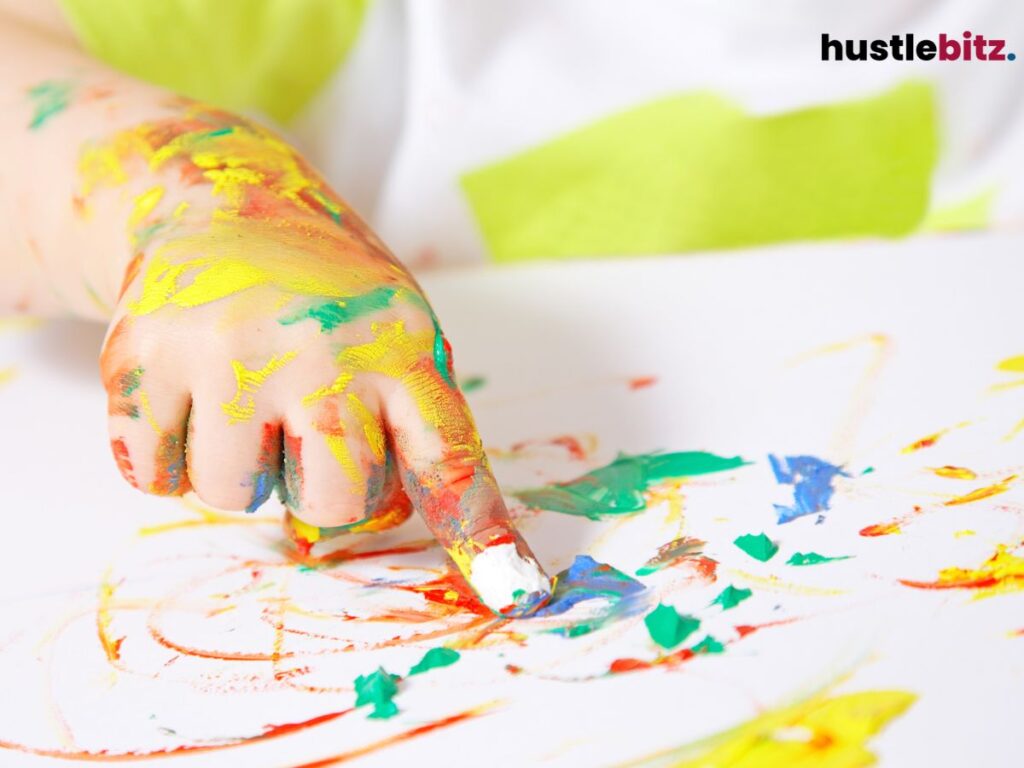
Amidst the complexities of modern life, finger painting offers a unique avenue for practicing mindfulness. This seemingly simple activity allows individuals to engage in mindful observation and intuitive creation, creating a mental space where stressors fade and focus intensifies. By immersing oneself in color exploration and tactile engagement, finger painting serves as a conduit for achieving a meditative state, fostering a deeper connection between mind and body.
The act of playful experimentation inherent in finger painting encourages a form of mindfulness that is both dynamic and grounding. As fingers glide through vibrant hues, the brain is gently coaxed into a state of present-moment awareness. Each stroke and blend of color demands attention, pulling one’s consciousness away from worries and towards the physical sensations and visual stimuli of the artwork. This process cultivates a heightened sense of mindfulness, where the mind is fully absorbed in the act of creation.
Moreover, the tactile engagement provided by finger painting stimulates sensory receptors in the skin, enhancing the overall mindfulness experience. The direct contact with paint and paper creates a tangible connection to the present moment, anchoring thoughts and emotions in the here and now.
This form of sensory immersion allows for a unique exploration of textures and colors, promoting a state of flow that is both calming and invigorating.
In essence, finger painting offers a multifaceted approach to mindfulness through its emphasis on color exploration, tactile engagement, and intuitive creation. It provides a sanctuary for the mind, allowing individuals to practice mindful observation and playful experimentation in a way that is both innovative and deeply restorative.
Emotional Expression

Many find that finger painting serves as an effective medium for emotional expression. The interplay between vibrant hues and the tactile experiences of spreading paint with one’s fingers can evoke profound emotional responses. Engaging with this form of art allows individuals to explore their color emotions, where different shades and tones become conduits for expressing a spectrum of feelings—ranging from joy and excitement to sadness and contemplation. This chromatic dialogue enables a deeper understanding of one’s emotional state, often revealing insights that words alone cannot capture.
Finger painting also taps into the evocative power of childhood memories. For many, the act of dipping fingers into paint and creating spontaneous, unstructured art can transport them back to simpler times, fostering a sense of nostalgia and comfort. This reconnection with early, uninhibited artistic endeavors can rejuvenate one’s artistic identity, often leading to a more authentic and unfiltered mode of expression.
The sensory richness of the tactile experiences involved in finger painting—feeling the texture of paint and the resistance of the canvas—further amplifies this emotional engagement, creating a holistic and immersive process.
Moreover, the physical act of finger painting facilitates emotional release. The freedom to express emotions through dynamic and uninhibited movements can be remarkably cathartic. The absence of brushes or tools removes barriers, allowing emotions to flow directly from the mind and heart through the fingers onto the canvas.
This immediacy can break down emotional barriers, offering a liberating outlet for pent-up feelings and contributing to an overall sense of psychological well-being.
Boosting Mental Clarity

Finger painting can significantly enhance mental clarity by offering a unique form of meditative focus. Engaging in this creative activity allows individuals to immerse themselves in the tactile experience, which can lead to a state of mindfulness that promotes heightened cognitive function. By concentrating on the colors and textures, the brain can momentarily shift away from stressors, allowing neural pathways to rejuvenate and optimize their performance.
One of the primary benefits of finger painting is its capacity to improve focus. When individuals devote their attention to the intricate details of their artwork, they train their brains to maintain concentration on a single task. This practice can translate into better focus improvement in other areas of life, such as work or study.
Additionally, this enhanced attention to detail fosters problem-solving skills. As individuals experiment with different techniques and approaches in their artwork, they develop creative thinking patterns that can be applied to real-world challenges.
Moreover, finger painting can contribute to memory enhancement. The repetitive and deliberate movements involved in painting help to reinforce neural connections associated with memory. This process not only aids in the retention of new information but also supports the recall of previously stored knowledge.
Final Thoughts
Finger painting, while often associated with childhood, is a powerful tool for fostering mental rest and creativity. By engaging in this simple yet profound activity, you can experience a range of benefits, from stress relief and emotional expression to enhanced mindfulness and cognitive function. The tactile exploration and freedom of expression that finger painting offers allow your brain to reset, helping you achieve mental clarity and emotional balance. Whether you’re looking to relax or stimulate your creative thinking, this art form provides a fulfilling and restorative experience.