

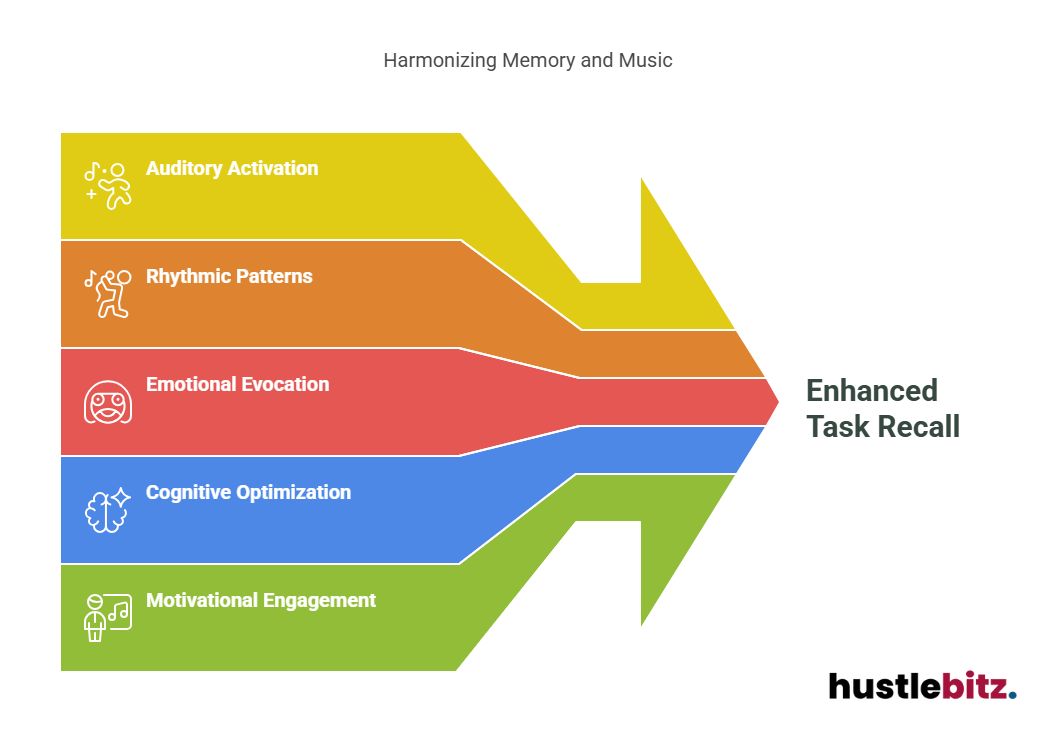
Singing your to-do list can enhance memory retention by activating the brain’s auditory pathways. The rhythmic and melodic elements involved in singing help structure information, making it easier to recall. This technique engages multiple brain regions responsible for cognitive function, creating a memorable framework. Music’s emotional resonance further enriches these cognitive associations, transforming mundane tasks into motivating experiences. Additionally, rhythmic patterns boost recall by linking musical cues with specific tasks, effectively turning your list into a cohesive auditory narrative. To understand the full impact of combining music with daily tasks, explore more about rhythmic and mnemonic influences.
Key Takeaways
- Singing activates auditory pathways, creating memorable frameworks for task recall.
- Rhythmic patterns enhance memory encoding, making tasks easier to remember.
- Music evokes emotions, forming cognitive associations that strengthen memory retention.
- Auditory learning optimizes cognitive function, aiding in organized task recall.
- Engaging with preferred melodies transforms task management into motivating experiences.
The Science Behind Melody Memory
The intricate relationship between music and memory is rooted in the brain’s remarkable ability to process and retain melodies. This cognitive function is not merely an artistic endeavor; it is a sophisticated neurological process that enhances the retention of information.
Melody retention taps into the brain’s natural propensity for auditory learning, allowing individuals to encode and retrieve data more efficiently. This phenomenon is leveraged through mnemonic devices, which often incorporate rhythm and melody to facilitate easier recall.
When one sings a to-do list, the brain engages its auditory pathways, creating a memorable framework that aids in memory retention. The rhythmic and melodic elements of music act as powerful triggers that activate brain waves associated with memory processing. As these brain waves oscillate, they enhance synaptic plasticity, which is crucial for long-term memory formation.
This process exemplifies the profound impact of auditory learning on cognitive function, providing a strategic advantage for those seeking to optimize their mental capabilities.
Incorporating melodies into daily routines empowers individuals to harness their brain’s full potential, transforming mundane tasks into memorable experiences. The utilization of melody retention not only enhances memory but also instills a sense of control over one’s cognitive environment.
How Music Engages the Brain
Engaging with music initiates a complex interplay of neurological processes that uniquely stimulate the brain. Musical cues serve as powerful catalysts for brain stimulation, activating multiple regions responsible for auditory learning and cognitive function. This multifaceted engagement enhances memory retention, offering a strategic advantage to those who harness the power of music in their daily routines.
The auditory cortex, responsible for processing sound, collaborates with other brain areas to decode musical cues, fostering a dynamic environment where information is more readily absorbed. This auditory learning process is not a passive experience; rather, it demands active participation from various neural networks, thereby optimizing cognitive function. The result is an enhanced ability to retain information, as the brain effectively encodes and retrieves data linked with musical patterns.
Furthermore, music’s rhythm and melody provide a structured framework that aids in organizing information, making it easier to recall. The brain’s innate affinity for patterns allows it to associate specific musical cues with particular tasks or pieces of information. This associative learning process is a testament to music’s efficacy in improving memory retention, offering a distinct advantage in both personal and professional contexts.
Incorporating music into learning strategies not only empowers individuals to optimize their cognitive capabilities but also fortifies their ability to remember and execute tasks efficiently. By leveraging the brain’s natural predilection for musical engagement, one can transform mundane to-do lists into memorable melodies, ensuring that critical tasks are not just noted, but ingrained in the mind.
Embracing this powerful tool elevates one’s ability to command their cognitive resources with precision and prowess.
Emotional Connection to Tunes

Music possesses an extraordinary ability to evoke emotions, forging deep connections between listeners and the melodies they cherish. This emotional resonance is not merely a byproduct of auditory pleasure but a potent tool that can enhance memory and focus. When individuals engage with music, they often experience nostalgic melodies that transport them to specific moments in time, creating powerful cognitive associations. Such associations strengthen the retention of information, as the brain links the emotional weight of the music with the tasks or memories at hand.
A key aspect of music’s influence lies in its capacity for mood enhancement. By altering emotional states, music can energize or calm the mind, creating an optimal mental environment for processing and retaining information. This transformation in mood can make the mundane tasks of a to-do list appear more engaging and less burdensome, enhancing one’s ability to tackle them with vigor and efficiency.
Furthermore, personal preference plays a crucial role in the emotional connection to tunes. The unique tastes of individuals mean that different genres and styles of music will evoke varying degrees of emotional resonance. By selecting music that aligns with one’s personal preferences, individuals can harness the full power of music’s emotional impact, turning their to-do list into a memorable and motivating experience.
Rhythms and Recall Enhancement

Rhythmicity, an inherent characteristic of music, plays a pivotal role in enhancing recall capabilities. The strategic application of rhythmic patterns in musical mnemonics serves as a potent cognitive enhancement tool, transforming mundane information into memorable sequences. This transformation occurs because rhythmic patterns align with the brain’s natural processing capabilities, facilitating more efficient memory encoding.
By structuring information within musical frameworks, individuals harness the power of auditory cues, which significantly bolster the retention and retrieval of information. The use of musical mnemonics can be particularly empowering, offering a sophisticated method to encode information that might otherwise be forgettable.
Rhythmic patterns act as a scaffold, enabling the brain to link new data with established cognitive structures. This linkage is not merely a passive process; it actively engages multiple neural pathways, thus enriching the memory encoding process. When information is sung or chanted, it is no longer just a series of disjointed facts but becomes part of a cohesive auditory narrative, making it more accessible when recall is needed.
Auditory cues, intrinsic to musical experiences, provide the brain with additional markers for information retrieval. These cues operate as signals, guiding the mind toward stored memories with precision and efficiency. This method of encoding and recalling information is not just advantageous but transformative, offering an edge in environments where memory recall equates to power.
Creating Your Custom To-Do Song

Crafting a personalized to-do song can transform your approach to task management, turning routine lists into engaging auditory experiences. This creative endeavor allows you to harness the power of music to enhance memory and efficiency. By integrating a structured approach to your to-do list, you can ensure that tasks are not only memorable but also enjoyable to recall.
The foundation of a compelling to-do song lies in combining lyrical creativity with a strategic to-do structure. Start by categorizing your tasks—prioritize them and group similar items together. This will provide a clear framework for your lyrics. Once the structure is in place, let your imagination run free. Incorporate witty wordplay or rhyming schemes to create personalized tunes that resonate with you.
Next, focus on melody selection. Choose a melody that is familiar yet adaptable, allowing you to weave in your tasks seamlessly. This familiarity will make it easier to recall your song, thus reinforcing your memory of the tasks. Consider popular tunes with simple, repetitive melodies that lend themselves well to catchy hooks.
| Task Category | Melody Choice | Lyrical Focus |
| High Priority | Upbeat Pop | Motivational Rhymes |
| Routine Tasks | Rhythmic Jazz | Humorous Lines |
| Creative Work | Soft Ballad | Inspirational Phrases |
| Errands | Catchy Jingles | Short, Snappy Hooks |
Incorporating Music Into Daily Tasks

Building on the creativity involved in crafting your custom to-do song, the next step involves integrating music directly into your daily routine to enhance productivity and enjoyment. By embedding musical mnemonics into everyday tasks, individuals can leverage auditory learning, transforming mundane activities into powerful cognitive experiences. This technique not only boosts task engagement but also harnesses the brain’s natural affinity for rhythm, thereby creating strong memory cues that facilitate better recall and execution of responsibilities.
Incorporating music into daily tasks taps into the concept of cognitive rhythm, where structured sound patterns aid in organizing thoughts and actions. When these rhythms are aligned with specific tasks, they serve as auditory anchors, triggering the brain to transition seamlessly between activities. This form of auditory learning allows for an enriched sensory experience, leading to more efficient task completion and heightened focus.
The use of music as a tool for enhancing productivity extends beyond the mere act of listening. It involves a deliberate selection of tunes that resonate with the desired state of mind for particular tasks. For instance, upbeat tempos can invigorate morning routines, while softer, mellower compositions may facilitate concentration during analytical tasks.
Moreover, these auditory cues can be customized to fit personal preferences, ensuring that the individual remains in control of their environment and mental state. This empowerment through sound fosters a sense of mastery over one’s schedule and responsibilities, turning the everyday into an orchestrated symphony of achievement.
Final Thoughts
Singing your to-do list can be a surprisingly effective way to improve memory retention and task management. By integrating music into your daily routine, you engage your brain’s auditory pathways, making tasks more memorable and enjoyable. The rhythm, melody, and emotional connection of music create a powerful framework for recall, transforming mundane tasks into motivating experiences. This simple yet effective strategy can elevate your productivity by turning your to-do list into a memorable auditory journey, enhancing both focus and creativity in your daily life.