

Lifelong learning is a cornerstone for personal and professional growth, underscored by a growth mindset and an insatiable curiosity. Through the wisdom of thinkers like Mortimer Adler and the innovative spirit suggested by Einstein and Curie, continuous learning propels individuals to overcome challenges and explore new horizons. Quotes such as Johann Wolfgang von Goethe’s emphasis on action and Bruce Lee’s advocacy for focused mastery echo the essence of commitment and discipline. Embrace the transformative influence of learning beyond the classroom to expand knowledge and creativity, unlocking endless potential and satisfaction. Explore further to discover more insightful inspirations.
Key Takeaways
- “Education is not the filling of a pail, but the lighting of a fire.” – William Butler Yeats
- Lifelong learning fuels personal and professional growth, enhancing adaptability in ever-changing environments.
- “Creativity increases with usage.” – Maya Angelou, highlighting the benefits of continuous learning and exploration.
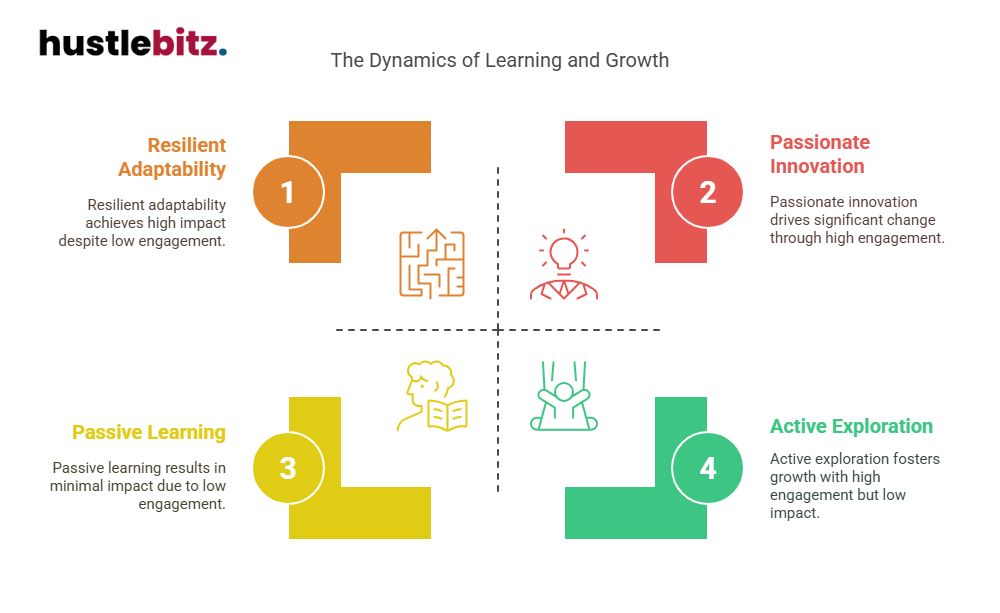
- Embracing challenges as learning opportunities cultivates resilience and adaptability.
- Passion for learning ignites innovation and drives meaningful change.
Embracing a Growth Mindset
Embracing a growth mindset is fundamental to lifelong learning and personal development. It empowers individuals to transcend limitations, fostering a sense of freedom that encourages the exploration of new ideas and skills. At its core, a growth mindset is about the belief in the potential for growth and improvement. This belief fuels the courage to embrace challenges and view them as opportunities rather than obstacles.
By shifting perspectives, individuals can develop resilience, a critical component in navigating life’s unpredictable journey. Resilience development is a by-product of consistently facing and overcoming challenges. As learners engage in self-reflection practices, they deepen their understanding of personal strengths and areas for growth.
This introspection is crucial in cultivating an adaptive mindset that thrives on learning from mistakes. Feedback utilization becomes a vital tool in this process, offering insights that guide future actions and decisions. Accepting and acting on constructive feedback transforms setbacks into stepping stones for success.
The journey of embracing a growth mindset is not singularly about individual advancement. It also enriches the collective, as those who practice it inspire others to adopt similar approaches. By sharing experiences and insights, a culture of continuous learning is nurtured.
This culture values the diverse paths of growth prompted by personal curiosity and ambition.
The Value of Curiosity

Curiosity stands as a cornerstone of lifelong learning, driving individuals to explore beyond the surface and discover deeper truths. It fuels a curiosity-driven exploration that challenges preconceived notions and inspires a relentless pursuit of knowledge. In a world where freedom of thought is cherished, curiosity empowers individuals to question assumptions, enabling them to dismantle barriers and venture into new realms of understanding.
The value of curiosity is reflected in its ability to foster creative problem solving. By embracing uncertainty, curious minds are not deterred by the unknown but are rather invigorated by it. This opens the door to innovative solutions that might otherwise remain hidden within the confines of conventional thinking. Such a mindset is essential for fostering innovation, as it encourages an open dialogue where ideas can be exchanged freely, leading to breakthroughs that propel progress.
Renowned thinkers have long recognized the transformative power of curiosity. Albert Einstein famously noted, “The important thing is not to stop questioning. Curiosity has its own reason for existing.” This sentiment captures the essence of a life lived in perpetual inquiry, where each question leads to new insights and wisdom.
Similarly, Marie Curie observed, “Be less curious about people and more curious about ideas.” Her words remind us that it is through the exploration of ideas that we expand our horizons and unlock the potential for growth.
In essence, curiosity is not merely a trait but a vital force that nurtures the spirit of lifelong learning. It invites individuals to explore uncharted territories, foster creativity, and embrace the unpredictable journey of discovery.
Learning Beyond the Classroom

In the realm of education, the concept of learning extends far beyond the confines of a traditional classroom. This expansive view embraces experiences and interactions that foster understanding and growth in diverse ways. Here are five enlightening quotes that underscore the power of learning beyond conventional academic settings:
- Experiential Learning: This approach emphasizes learning through experience and reflection. It empowers individuals to explore and internalize knowledge in real-world contexts, thus facilitating profound personal and professional growth.
- Self-Directed Education: The freedom to pursue one’s own educational journey is a hallmark of self-directed learning. It encourages autonomy and the pursuit of individual interests, fostering a lifelong passion for discovery and understanding.
- Informal Learning and Community Engagement: Learning through informal means—such as community involvement—allows individuals to acquire knowledge organically, through interactions and shared experiences. This engagement not only enhances skills but also strengthens communal ties and fosters a sense of belonging.
These quotes remind us that learning is an ongoing process, not confined to the walls of a classroom. They inspire us to seek knowledge actively through various avenues, embracing a mindset of continuous improvement.
As we engage with different communities and experiences, we unlock new perspectives and insights, contributing to our personal development and the betterment of society.
Ultimately, the journey of learning is a path to freedom, allowing us to break free from imposed boundaries and explore the world with curiosity and openness. Through experiential learning, self-directed education, and informal learning, we find the means to grow continuously, enriching our lives and the lives of those around us.
The Power of Knowledge
The impact of knowledge on personal and societal progress cannot be overstated. Throughout history, the acquisition and dissemination of knowledge have been pivotal in driving innovation and change. Knowledge empowerment stands as a beacon of liberation, enabling individuals to transcend limitations and unlock their potential.
The following quotes underscore the transformative power of knowledge and its capacity to inspire growth and freedom.
One poignant quote asserts, “Knowledge is power.” This timeless adage encapsulates the essence of knowledge empowerment, highlighting how informed individuals are better equipped to navigate life’s challenges and seize opportunities.
In the realm of knowledge sharing, another insightful quote emphasizes, “The more that you read, the more things you will know. The more that you learn, the more places you’ll go.” This speaks to the boundless horizons that open when knowledge is freely exchanged and disseminated.
In terms of knowledge application, consider the words, “Knowing is not enough; we must apply. Willing is not enough; we must do.” This underscores the necessity of translating knowledge into action, driving meaningful change and progress.
Moreover, as we contemplate knowledge retention, the quote, “Education is not the filling of a pail, but the lighting of a fire” beautifully illustrates the enduring nature of true understanding and insight.
Lifelong Learning in Action

Amidst the ever-evolving landscape of modern life, lifelong learning emerges as an indispensable tool for personal and professional growth. It fosters an environment where individuals can continuously enhance their skills and knowledge, ultimately leading to a fulfilling life.
The essence of lifelong learning lies in its practical application, where real-world experiences drive home the lessons of self-directed education and experiential learning. This dynamic process not only promotes personal development but also encourages knowledge sharing among diverse communities.
To truly grasp the concept of lifelong learning in action, consider these top five quotes:
- “Education is not the filling of a pail, but the lighting of a fire.” – William Butler Yeats. This quote underscores the transformative power of education as an ongoing process, inspiring a lifelong passion for learning and personal development.
- “I am always doing that which I cannot do, in order that I may learn how to do it.” – Pablo Picasso. Here, the emphasis is on experiential learning and pushing boundaries to achieve skill enhancement. It encourages individuals to embrace challenges as opportunities for growth.
- “The purpose of learning is growth, and our minds, unlike our bodies, can continue growing as we continue to live.” – Mortimer Adler. This highlights the endless possibilities of self-directed education and continuous self-improvement.
From Passion to Mastery

Driven by the desire for excellence, the journey from passion to mastery embodies the transformative power of dedication and perseverance. This path, often embarked upon through passion projects, is a testament to the human spirit’s capacity for growth and innovation.
As one delves deeper into their chosen craft, the mastery journey becomes a canvas for creative exploration, where the boundaries of skill development are continuously expanded.
The words of Johann Wolfgang von Goethe, “Knowing is not enough; we must apply. Willing is not enough; we must do,” resonate profoundly with those who view personal growth as an ongoing process. This perspective encourages individuals to transform their passion into tangible skills, reinforcing the importance of action in the pursuit of mastery.
Similarly, Bruce Lee’s wisdom, “I fear not the man who has practiced 10,000 kicks once, but I fear the man who has practiced one kick 10,000 times,” highlights the significance of focused and repeated practice. It is a reminder that mastery is not about breadth but depth, requiring relentless dedication to honing a particular skill.
Moreover, Maya Angelou’s insight, “You can’t use up creativity. The more you use, the more you have,” inspires continuous creative exploration. This idea empowers those on a mastery journey to push the boundaries of their imagination, fostering innovation and new perspectives.
In the words of Aristotle, “We are what we repeatedly do. Excellence, then, is not an act, but a habit.” This quote underscores that the path from passion to mastery is paved with consistent effort, a sentiment echoed by those committed to lifelong learning.
Final Thoughts
Lifelong learning fuels personal growth, creativity, and adaptability, encouraging us to embrace challenges and constantly seek new knowledge. With a growth mindset, we can turn obstacles into opportunities, deepening our understanding of the world around us. This journey goes beyond formal education, thriving through curiosity, real-world experiences, and community engagement. By committing to continuous learning, we not only enhance our own lives but also inspire others to do the same, fostering a culture of growth and innovation. Ultimately, the pursuit of knowledge leads to a more enriching and fulfilling life.