

Ancient proverbs offer enduring wisdom that can fuel modern motivation, helping individuals navigate life’s complexities and achieve personal growth. Lao Tzu’s adage, “A journey of a thousand miles begins with a single step,” underscores the importance of initiating action. Meanwhile, the proverb “If you don’t know where you’re going, any road will take you there,” emphasizes the value of clear goals. Meng Tse’s advice on anger management and Zen teaching on inner peace further stress emotional resilience and mindfulness. By exploring these time-honored truths, you’ll uncover strategies to foster self-discovery, creativity, and contentment.
Key Takeaways
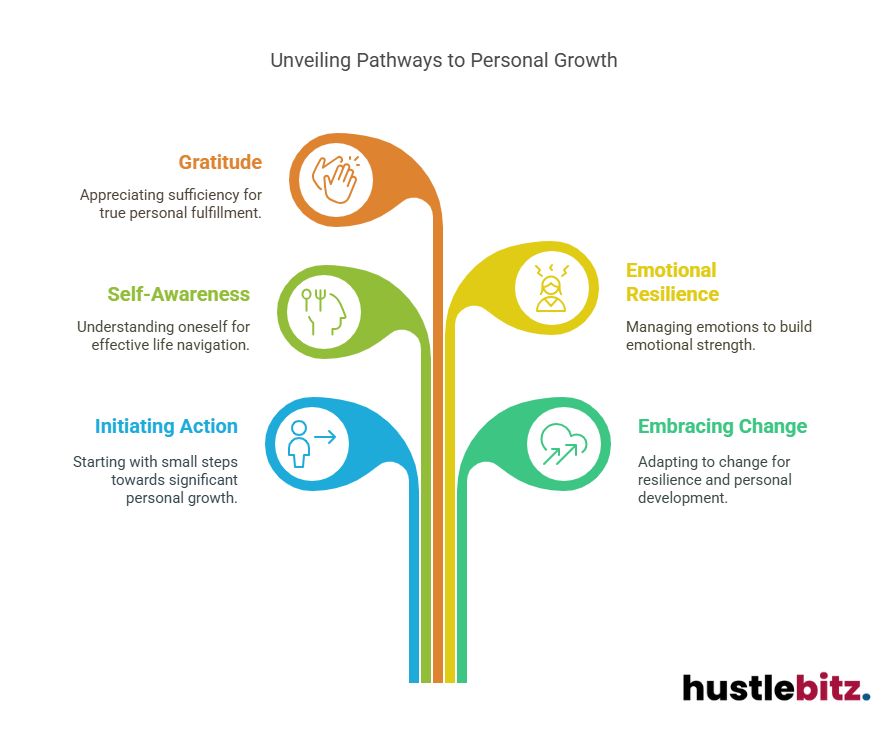
- “A journey of a thousand miles begins with a single step” emphasizes the importance of initiating action for personal growth.
- “Change is the only constant” highlights the necessity of embracing change to build resilience and adaptability.
- “Know thyself” underscores the value of self-awareness and goal setting in navigating life’s complexities.
- “Patience is a virtue” stresses the importance of managing emotions and cultivating emotional resilience.
- “Contentment is natural wealth” encourages recognizing sufficiency and practicing gratitude for true fulfillment.
“A journey of a thousand miles begins with a single step.” — Lao Tzu
In the vast expanse of human endeavors, the ancient proverb “A journey of a thousand miles begins with a single step,” attributed to Lao Tzu, encapsulates a profound truth about the nature of progress. This wisdom underscores the importance of taking action, no matter how daunting the goal may appear. The self-discovery journey begins with that pivotal first step, illuminating the path to personal growth and transformation.
Taking action is the cornerstone of any meaningful journey. It is the initial move that breaks inertia and sets the wheels of change in motion. Embracing change, though often accompanied by uncertainty and discomfort, is essential for overcoming fears that hinder progress. The act of stepping forward, even tentatively, signifies a commitment to the process of evolution and self-improvement.
Overcoming fears is a critical aspect of this journey. Fear can paralyze and prevent one from embarking on new ventures or making necessary changes. Confronting and surmounting these fears is not only a step towards achieving specific goals but also a profound exercise in personal growth. Each conquered fear expands one’s capabilities and builds resilience, fostering a mindset that is open to continuous learning and adaptation.
Personal growth is the ultimate reward of this journey. It is an ongoing process that requires perseverance and a willingness to embrace both successes and setbacks. Each step taken, no matter how small, contributes to a larger narrative of development and self-discovery.
In essence, Lao Tzu’s proverb serves as a timeless reminder that the journey of a thousand miles is composed of countless single steps, each one vital in its own right.
“If you don’t know where you’re going, any road will take you there.” — Chinese Proverb

Navigating life’s complexities without a clear destination can lead to aimless wandering, as articulated by the Chinese proverb, “If you don’t know where you’re going, any road will take you there.” This timeless wisdom highlights the importance of setting specific goals and having a well-defined vision. In the modern context, this proverb underscores the necessity of goal setting for achieving success and personal fulfillment.
Without a clear life direction, individuals may find themselves making decisions based not on their true aspirations but on transient whims and external pressures. This lack of a defined path can impede personal growth and lead to a sense of dissatisfaction.
Goal setting serves as a compass, guiding one’s actions and decisions toward a desired outcome. It fosters self-awareness by compelling individuals to reflect on their values, desires, and strengths.
Effective decision making is intrinsically linked to goal setting. When individuals know where they want to go, they are better equipped to weigh their options and choose paths that align with their objectives. This not only enhances their chances of success but also ensures that their efforts are purposeful and meaningful.
Moreover, a well-defined vision helps in overcoming obstacles and maintaining motivation. Clear goals act as benchmarks for progress, providing a sense of accomplishment as each milestone is reached. This structured approach to personal growth leads to a more focused and fulfilling life.
“Never give way to anger otherwise, in one day you could burn up the wood that you collected in many bitter weeks” — Meng Tse

Meng Tse’s proverb, “Never give way to anger otherwise, in one day you could burn up the wood that you collected in many bitter weeks,” serves as a poignant reminder of the destructive power of uncontrolled emotions. This ancient wisdom emphasizes the importance of anger management, urging us to consider the long-term consequences of our reactions. In contemporary life, where stressors abound, the application of this wisdom is more relevant than ever.
Effective anger management begins with emotional resilience. This entails developing the ability to maintain composure and focus, even in the face of provocation. Cultivating patience is a critical component of this process. By consciously practicing patience, we fortify our capacity to delay immediate emotional responses, thereby preventing potential damage to our relationships and endeavors.
Mindfulness practice is another invaluable tool in managing anger. By being fully present and aware of our thoughts and feelings, we can recognize the early signs of rising anger. This awareness allows us to intervene before emotions escalate uncontrollably. Techniques such as deep breathing, meditation, or simple reflection can aid in diffusing anger and restoring calm.
The practical application of Meng Tse’s wisdom extends to our professional and personal lives. By integrating these principles, we not only protect our emotional well-being but also enhance our interactions and productivity.
The act of managing anger is not about suppressing emotions but channeling them constructively. Through patience cultivation and mindfulness practice, we can ensure that the metaphorical wood we gather through hard work is not consumed by the flames of momentary anger, but rather, used to sustain long-term progress.
“When my heart is at peace, the world is at peace.” — Zen Poem

Often, the Zen poem, “When my heart is at peace, the world is at peace,” encapsulates a profound truth about the interconnectedness of inner tranquility and external harmony. This ancient wisdom underscores the notion that our internal state profoundly influences our perception and interaction with the external world.
The cultivation of inner peace is not merely a personal endeavor but a foundational practice that radiates outward, fostering a harmonious environment.
Cultivating peace within ourselves involves various mindfulness practices aimed at achieving emotional balance and clarity. Personal reflection, meditation, and mindful breathing are essential tools in this journey. These practices enable us to navigate life’s turbulence with a composed and serene heart, ultimately contributing to a more peaceful world.
Consider the following insights to evoke a deeper emotional understanding:
- Inner Tranquility: Imagine the calm that washes over you during a quiet sunrise, a moment untouched by the chaos of the day. This is the tranquility we seek to cultivate within.
- Peace Cultivation: Think of peace as a garden; it requires daily care, attention, and nurturing to flourish. Each act of mindfulness is a seed planted towards a harmonious existence.
- Emotional Balance: Picture a sturdy tree in a storm, its roots holding firm despite the wind’s fury. Emotional balance allows us to remain grounded amidst life’s challenges.
- Personal Reflection: Reflect on moments of personal triumph and growth. These reflections serve as reminders of our capacity to cultivate inner peace and, by extension, a peaceful world.
In essence, by prioritizing inner tranquility and engaging in mindfulness practices, we not only achieve emotional balance but also contribute to the broader tapestry of global harmony.
This Zen poem thus serves as a timeless beacon, guiding us towards a more peaceful existence.
“The great man is he who does not lose his child’s heart. — Mencius

As we explore the interconnectedness of inner peace and external harmony, another profound piece of ancient wisdom beckons our attention: “The great man is he who does not lose his child’s heart.” — Mencius. This proverb underscores the significance of retaining childlike wonder, a trait often overshadowed by the burdens of adulthood.
In the pursuit of success and societal expectations, many lose touch with the innocent curiosity that once fueled their dreams. Childlike wonder is not merely about naivety but about maintaining a sense of awe and openness to new experiences. This approach fosters emotional resilience, enabling individuals to navigate life’s challenges with a positive outlook.
When we view the world through the eyes of a child, we are more likely to embrace change and remain adaptable, crucial traits in an ever-evolving world. Moreover, nurturing creativity becomes effortless when one retains the essence of a child’s heart.
Children are natural innovators, unrestrained by preconceived notions and societal norms. By preserving this intrinsic creativity, adults can approach problems with fresh perspectives, leading to innovative solutions and breakthroughs in various fields.
Wisdom retention is another critical aspect highlighted by Mencius’ proverb. The innocence of a child’s heart allows for the absorption of pure, untainted knowledge. As adults, maintaining this innocence aids in the continuous acquisition of wisdom, free from biases and prejudices that often cloud judgment.
In essence, to be truly great, one must strive to balance the maturity of adulthood with the purity and curiosity of childhood. This delicate equilibrium fosters a life rich in emotional resilience, creativity, and timeless wisdom.
“Always, we hope someone else has the answer. Some other place will be better. Some other time it will all turn out. This is it. No one else has the answer. No other place will be better, and it has already turned out.” — Lao Tzu

Why do we often look outward for solutions, believing that the key to our happiness and success lies elsewhere? This tendency to externalize our aspirations and anxieties is deeply ingrained, yet Lao Tzu’s timeless wisdom challenges us to seek answers within. He reminds us that the journey of self-discovery begins with embracing the present moment and taking personal responsibility for our lives.
In our quest for fulfillment, it is common to fall into the trap of thinking:
- Someone else holds the answers: Believing that others have the solutions to our problems can lead to dependency and disempowerment.
- A different place will be better: Imagining that a new location will resolve our issues ignores the reality that we carry our inner turmoil wherever we go.
- Another time will make it right: Procrastination and delay often stem from the illusion that the future holds better opportunities, disregarding the importance of the present.
- It will all turn out eventually: Relying on fate or destiny can undermine our sense of agency and the proactive steps needed for personal growth.
Lao Tzu’s assertion that “This is it” encourages us to cultivate an acceptance mindset, recognizing that the answers we seek are already within us. By acknowledging that no one else has the answer, no other place will be better, and it has already turned out, we empower ourselves to find inner peace.
This shift in perspective fosters a profound sense of ownership over our lives, encouraging us to embrace the present moment as the fertile ground for our self-discovery journey.
In this light, Lao Tzu’s wisdom is not just a philosophical insight but a practical guide for navigating modern life with clarity and purpose.
“Those who know that enough is enough will always have enough” — Lao Tzu

Contentment, a cornerstone of Lao Tzu’s philosophy, is epitomized in the proverb, “Those who know that enough is enough will always have enough.” This adage underscores the vital importance of recognizing and appreciating sufficiency in one’s life. At its core, this wisdom advocates for a contentment mindset, where one acknowledges the value of what they already possess, fostering a sense of fulfillment and reducing incessant desires.
In an era characterized by relentless pursuit and consumerism, embracing simplicity living becomes crucial. Lao Tzu’s words remind us that true abundance does not stem from accumulating more but from appreciating what is already at hand. This philosophy aligns with modern movements that endorse minimalism and sustainable living, demonstrating that less can indeed be more.
A gratitude practice further accentuates this principle. By consciously acknowledging and valuing the present moment and its offerings, individuals can cultivate a deep sense of satisfaction. This practice reinforces the abundance philosophy, shifting focus from scarcity to sufficiency, and nurturing a profound sense of inner peace.
Moreover, the concept of “enough” as portrayed by Lao Tzu, challenges societal norms that equate success with excess. Instead, it promotes a balanced approach where contentment is found in moderation and mindful living. This perspective encourages individuals to reassess their definitions of success and happiness, guiding them towards more meaningful and purposeful lives.
Final Thoughts
The exploration of ancient proverbs in this article reveals timeless wisdom that remains relevant in today’s fast-paced world. From Lao Tzu’s call to take the first step in any journey to the reminder that true contentment comes from recognizing sufficiency, these proverbs offer profound insights for personal growth and motivation. Emphasizing self-awareness, emotional resilience, and the value of the journey over the destination, these teachings encourage us to embrace change, cultivate patience, and engage in mindfulness. As we navigate the complexities of modern life, these ancient truths serve as guiding principles, inspiring us to find fulfillment and clarity within ourselves. By applying these lessons, we can foster a deeper sense of purpose, creativity, and contentment in our lives.