

In our hyper-connected world, a digital detox is crucial for rejuvenating the mind and enhancing well-being. Digital overload manifests as information fatigue, technology dependence, and emotional exhaustion, leading to mental fatigue and decreased cognitive efficiency. Recognize the signs, such as persistent anxiety and sleep disturbances. Schedule screen-free intervals and establish tech boundaries to promote mental clarity and social connection. Engage in offline activities like creative hobbies, physical exercise, and community events to alleviate stress. Reconnecting with nature can also provide balance and peace. Explore strategies to effectively manage digital consumption and prioritize mental health.
Key Takeaways
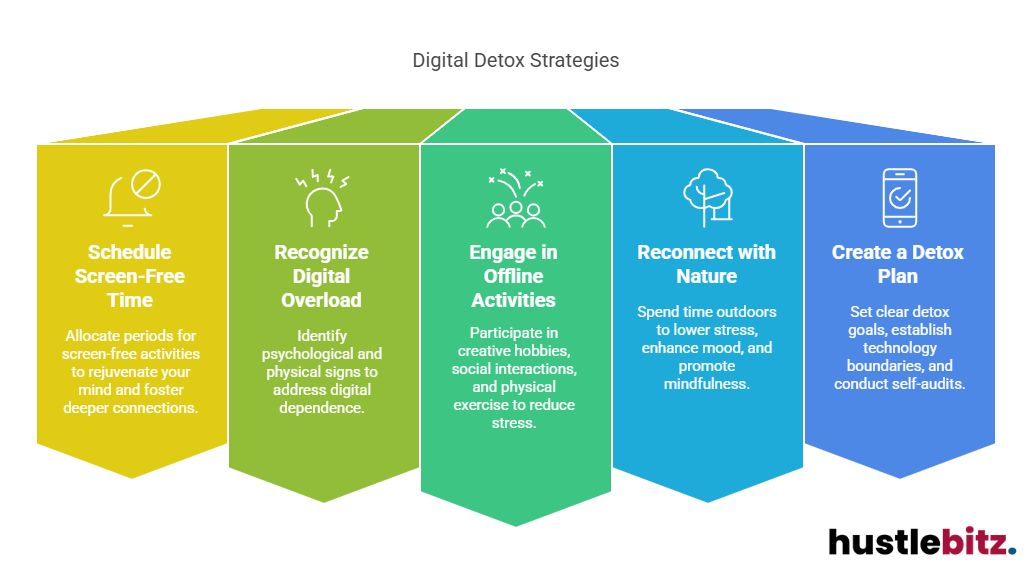
- Schedule Screen-Free Time: Allocate specific periods daily for screen-free activities to rejuvenate your mind and foster deeper connections.
- Recognize Digital Overload: Identify psychological and physical signs like irritability, anxiety, and sleep disturbances to address digital dependence.
- Engage in Offline Activities: Participate in creative hobbies, social interactions, and physical exercise to reduce stress and improve emotional well-being.
- Reconnect with Nature: Spend time outdoors to lower stress, enhance mood, and promote mindfulness through activities like nature walks and outdoor meditation.
- Create a Detox Plan: Set clear detox goals, establish technology boundaries, and conduct self-audits to manage and reduce unnecessary screen time effectively.
Understanding Digital Overload
In today’s hyper-connected world, digital overload has emerged as a pervasive issue, affecting individuals across all age groups and professions. This phenomenon, often characterized by information fatigue, technology dependence, mental clutter, and emotional exhaustion, stems from the relentless influx of digital stimuli. The constant barrage of notifications, emails, and social media updates forces the brain to process vast amounts of information continuously, leading to mental fatigue and decreased cognitive efficiency.
Information fatigue, a key component of digital overload, occurs when the sheer volume of data overwhelms our cognitive capacity to process it effectively. Technology dependence exacerbates this issue, as individuals increasingly rely on digital devices for both professional and personal tasks. The omnipresence of technology blurs the lines between work and leisure, making it challenging to establish clear digital boundaries.
Mental clutter is another significant aspect of digital overload. The continuous engagement with multiple digital platforms fragments our attention and diminishes our ability to focus on single tasks. This scattered attention can hinder productivity and creativity, as the mind struggles to prioritize and process information efficiently.
Moreover, emotional exhaustion is an often-overlooked consequence of digital overload. Constant connectivity can lead to stress and anxiety, as individuals feel the pressure to stay updated and responsive at all times. The lack of downtime and the inability to disconnect from digital devices contribute to burnout and diminished well-being.
Understanding digital overload is crucial for mitigating its adverse effects. By recognizing the underlying factors such as information fatigue, technology dependence, mental clutter, and emotional exhaustion, individuals can begin to establish healthier digital boundaries and adopt strategies to manage their digital consumption more effectively.
Recognizing the Signs

Recognizing the signs of digital overload is essential for taking proactive steps to mitigate its impact on mental and emotional well-being. In today’s hyper-connected world, distinguishing between productive tech use and harmful tech dependency can be challenging.
However, identifying the subtle yet telling signs of digital burnout can serve as the first step towards reclaiming mental clarity and emotional balance.
One of the primary indicators of tech dependency is a persistent feeling of emotional fatigue. This can manifest as irritability, anxiety, or a general sense of being overwhelmed, especially when disconnected from digital devices.
The constant need to check notifications or emails can erode mental clarity, making it difficult to focus on tasks or enjoy offline activities.
Furthermore, prolonged digital engagement often leads to social disconnection. Despite the illusion of connectivity offered by social media, excessive screen time can reduce face-to-face interactions, weakening real-world relationships.
This social disconnection can exacerbate feelings of loneliness and isolation, further contributing to emotional fatigue and burnout.
To help you better recognize the signs, consider the following indicators:
- Persistent irritability or anxiety: Feelings of unease or frustration when away from digital devices.
- Difficulty focusing: Struggling to concentrate on tasks without feeling the urge to check your phone or computer.
- Reduced social interactions: Noticeable decline in face-to-face engagements with family and friends.
- Sleep disturbances: Trouble falling or staying asleep due to late-night screen use.
- Physical discomfort: Experiencing headaches, eye strain, or other physical symptoms linked to prolonged device usage.
Scheduling Screen-Free Time

Creating intentional moments of disconnection can be a powerful antidote to digital overload. In our hyper-connected world, scheduling screen-free time is essential for maintaining mental well-being. Mindful scheduling of these intervals helps ensure that individuals and families can reap the benefits of reduced digital consumption without feeling deprived.
One effective strategy is to designate specific periods of the day for screen-free activities. For instance, allocating morning hours to engage in physical exercise, meditation, or reading can set a positive tone for the day.
Similarly, reserving evenings for tech-free zones encourages winding down and better sleep quality. Establishing consistent routines around these times not only reduces screen time but also fosters healthier habits.
Family time can be significantly enriched by incorporating screen-free moments. Dedicating time for shared meals, outdoor activities, or board games strengthens familial bonds and enhances communication.
By creating tech-free zones such as the dining room or living room, families can enjoy uninterrupted interactions, promoting a deeper connection.
Moreover, personal reflections during screen-free intervals are crucial for mental clarity. Without the constant barrage of notifications and digital distractions, individuals can engage in introspective practices like journaling, mindfulness meditation, or simply enjoying nature.
These moments of solitude provide an opportunity to process thoughts, set goals, and cultivate a sense of inner peace.
Creating a Detox Plan

Building on the benefits of scheduling screen-free time, a structured digital detox plan can offer a comprehensive approach to reducing digital dependency. Establishing clear detox goals is the first step in this journey. Goals should be realistic and tailored to individual needs, whether it’s reducing overall screen time, minimizing social media usage, or creating technology-free zones within the home.
Creating technology boundaries is crucial for maintaining focus and promoting mindful consumption. Defining specific times and places where technology is off-limits helps reinforce these boundaries. For example, setting rules such as no devices during meals or after a certain hour in the evening can significantly reduce unnecessary screen time and foster more meaningful interactions.
Understanding one’s digital habits is essential for crafting an effective detox plan. Conducting a self-audit to identify patterns in technology use can illuminate areas that need adjustment. This might involve tracking daily screen time or noting which apps are most frequently used and why.
Engaging with support networks can provide motivation and accountability throughout the detox process. Sharing detox goals with family, friends, or online communities can offer encouragement and create a sense of shared purpose. These networks can also provide practical advice and emotional support, making the detox journey more manageable.
Here are some key elements to consider when creating a detox plan:
- Set clear and achievable detox goals to provide direction and purpose.
- Establish technology boundaries to create a structured environment.
- Practice mindful consumption by being intentional about technology use.
- Identify and adjust digital habits through self-assessment.
- Utilize support networks for encouragement and accountability.
Engaging in Offline Activities

Engaging in offline activities is a pivotal component of a successful digital detox, offering numerous benefits for mental and physical well-being. By immersing oneself in creative hobbies, fostering social interactions, engaging in mindfulness practices, participating in physical exercise, and attending community events, individuals can effectively mitigate the adverse effects of constant digital connectivity.
Creative hobbies like painting, knitting, or playing a musical instrument provide a productive outlet for self-expression and stress relief. These activities not only hone skills but also promote a sense of accomplishment and satisfaction. Social interactions, such as meeting friends for coffee or joining a book club, foster genuine human connections, which are essential for emotional health and reducing feelings of isolation.
Mindfulness practices, including meditation and journaling, cultivate a state of present-moment awareness, helping to alleviate anxiety and improve focus. Regular physical exercise, whether through yoga, running, or team sports, enhances cardiovascular health, boosts endorphin levels, and improves overall well-being. Community events, such as local fairs or volunteering opportunities, offer a platform for civic engagement and strengthen community ties.
Below is a table highlighting various offline activities and their corresponding benefits:
| Activity | Benefits | Examples |
| Creative Hobbies | Stress Relief, Skill Building | Painting, Knitting, Music |
| Social Interactions | Emotional Health, Connection | Coffee Meetups, Book Clubs |
| Mindfulness Practices | Anxiety Relief, Focus | Meditation, Journaling |
| Physical Exercise | Cardiovascular Health, Endorphins | Yoga, Running, Team Sports |
| Community Events | Civic Engagement, Social Bonds | Local Fairs, Volunteering |
Reconnecting With Nature
Exploring offline activities offers a plethora of benefits for individuals seeking a break from digital devices. One of the most effective ways to achieve a digital detox is through reconnecting with nature. Immersing oneself in the natural environment has profound rejuvenating effects on the mind and body, enabling us to rediscover a sense of balance and peace that is often disrupted by constant connectivity.
Nature immersion is the practice of spending quality time in natural settings, such as forests, parks, or mountains, to foster a deeper connection with the environment. This practice has been shown to reduce stress levels, enhance mood, and improve overall mental well-being. Engaging in mindful walking, where one focuses on the sensations of each step and the surrounding scenery, can further amplify these benefits by promoting mindfulness and presence.
Outdoor meditation is another powerful technique for achieving mental clarity. By meditating in a natural setting, individuals can experience a heightened sense of tranquility and groundedness. The sounds of rustling leaves and chirping birds serve as natural meditative aids, helping to quiet the mind and deepen the meditative experience.
Eco therapy benefits extend beyond just mental health; they also encompass physical well-being. Spending time outdoors encourages physical activity, whether through hiking, gardening, or simply walking. This not only improves cardiovascular health but also enhances respiratory function and muscle strength.
Additionally, wildlife observation offers a unique opportunity to engage with the natural world. Observing animals in their habitats fosters a sense of wonder and appreciation for biodiversity, further enriching the experience of nature immersion.
- Stress reduction through nature immersion
- Enhanced mindfulness via mindful walking
- Increased tranquility from outdoor meditation
- Physical health improvements with eco therapy benefits
- Heightened appreciation for biodiversity through wildlife observation
Final Thoughts
In a world where digital devices dominate our daily routines, incorporating a digital detox into your life is crucial for mental clarity, emotional balance, and overall well-being. By recognizing the signs of digital overload, creating screen-free habits, and engaging in offline activities like creative hobbies, social interactions, and nature immersion, you can reclaim your focus and reconnect with what truly matters. Remember that taking time away from screens is not about avoiding technology but about fostering a healthier, more balanced relationship with it. By embracing these strategies, you can rejuvenate your mind and cultivate a more fulfilling, mindful existence in a connected world.